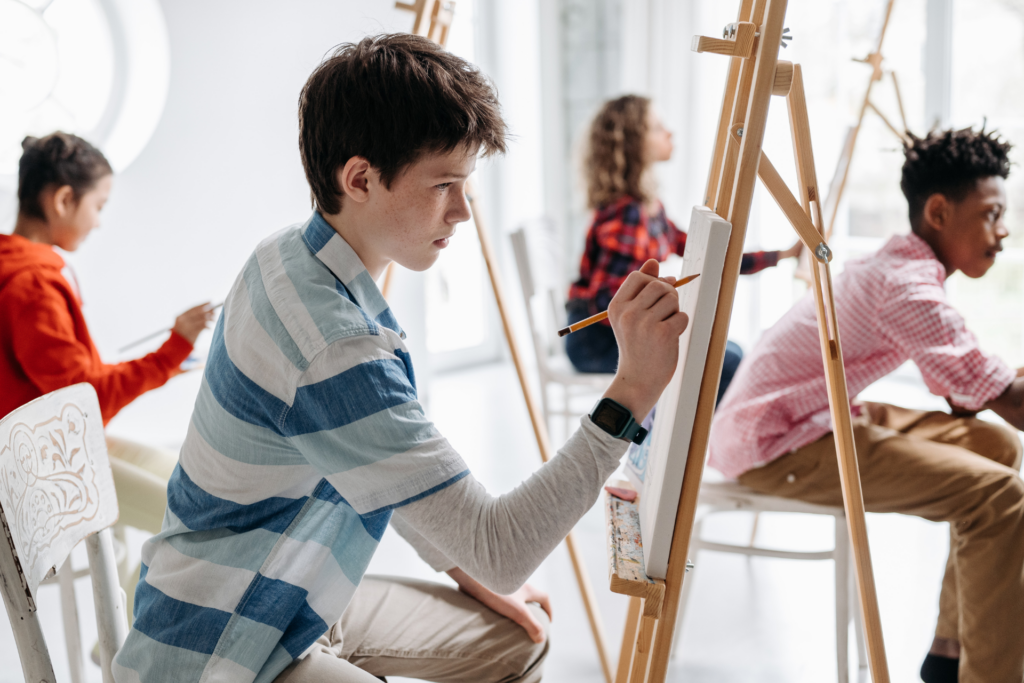
Art gives children opportunities to explore ideas, develop fine motor skills, solve visual problems, and express emotions. Creative learning can happen through drawing, painting, sculpture, photography, crafts, digital design, and many other forms. American families have access to school programs, community classes, private studios, online instruction, museum activities, and home-based projects.
Choosing the right art class depends on the child’s interests, age, schedule, learning style, and experience. Families may use creative learning and family guides while comparing educational activities and organizing art spaces at home. The strongest program is not always the most expensive. It is the one that keeps the child engaged while teaching useful skills.
Parents should allow creativity to develop without expecting every project to look professional. Art education is about observation, experimentation, technique, imagination, and confidence.
Explore School Art Programs
School art classes provide convenient access to creative learning.
Elementary programs may introduce:
Drawing
Color
Painting
Paper crafts
Clay
Basic design
Art history
Middle and high school programs may offer:
Studio art
Ceramics
Photography
Graphic design
Painting
Digital media
Advanced drawing
Portfolio development
Parents can ask about available electives and after-school clubs.
School programs may include exhibitions or community projects.
Students can display work and learn from classmates.
Art classes may also connect with history, culture, science, literature, and technology.
Families should encourage children to take school art seriously while allowing room for experimentation.
Education-focused creative arts and parenting blogs may provide ideas for supporting artistic learning outside school.
Consider Community Art Classes
Community centers often provide affordable programs.
Classes may meet after school, during weekends, or in summer.
Programs can include drawing, painting, crafts, pottery, sewing, printmaking, or mixed media.
Community classes may include students from different schools.
This can help children build social confidence.
Parents should ask about:
Age groups
Class size
Instructor experience
Materials
Costs
Schedule
Safety
Project types
Some programs include supplies in the registration fee.
Others provide a required materials list.
Families should calculate the total cost.
A short class series may be useful before committing to a longer program.
Compare Private Studio Lessons
Private art studios may offer specialized instruction.
Students can receive more focused guidance.
Programs may concentrate on realistic drawing, watercolor, painting, sculpture, fashion illustration, animation, or portfolio development.
Parents should review student work and teaching approaches.
A studio should support creativity rather than requiring every student to produce identical work.
Structured lessons can teach technique.
However, children also need opportunities to make personal choices.
Private instruction may cost more than community classes.
Families should compare lesson length, class size, materials, and cancellation policies.
A trial class can help determine whether the environment feels comfortable.
The instructor should communicate respectfully with children.
Feedback should explain how to improve without discouraging effort.
Try Online Art Instruction
Online art classes provide flexibility.
Children can learn from home and repeat demonstrations.
Programs may include live sessions or recorded lessons.
Online instruction can cover drawing, painting, digital art, animation, crafts, photography, and design.
Parents should consider the child’s attention span.
Young children may need adult help with setup.
Live classes provide interaction.
Recorded lessons allow flexible timing.
Families should prepare materials before class begins.
The device should be positioned so the child can see the instructor while working.
Parents should review online safety and privacy practices.
Creative family learning support services may help households organize broader educational and activity needs.
Explore Drawing and Painting Classes
Drawing is a useful foundation for many visual arts.
Students may learn:
Line
Shape
Proportion
Texture
Shading
Perspective
Observation
Composition
Beginner classes should provide clear instruction without demanding perfection.
Children may draw objects, people, animals, landscapes, or imaginative scenes.
Painting classes introduce color mixing, brush control, layering, and visual expression.
Materials may include watercolor, tempera, acrylic, or other age-appropriate media.
Parents should check clothing requirements.
Art can be messy.
Older clothing or protective aprons may be useful.
Children should learn how to clean materials properly.
Consider Sculpture and Clay Programs
Three-dimensional art can be especially engaging for children who enjoy building.
Clay classes may include hand-building, pottery, modeling, or ceramics.
Students can create bowls, figures, tiles, decorative objects, or imaginative forms.
Programs using kilns require trained supervision.
Parents should ask whether firing and glazing costs are included.
Other sculpture materials may include:
Cardboard
Paper
Wire
Wood
Fabric
Recycled materials
Building projects develop planning and spatial skills.
Children learn how shapes connect and remain balanced.
Sculpture also encourages experimentation.
Projects may change during construction.
That process supports flexible thinking.
Explore Digital Art and Animation
Digital art attracts many students who enjoy technology.
Programs may teach:
Digital drawing
Graphic design
Photo editing
Animation
Character design
Visual storytelling
Students can learn how digital tools support creativity.
Technology should not replace basic artistic thinking.
Color, composition, shape, storytelling, and observation remain important.
Families should check device and software requirements.
Some programs provide equipment.
Others expect students to bring devices.
Parents should understand account and privacy requirements.
Children should learn to respect copyrighted work.
Using references for learning is different from copying and claiming original ownership.
Digital projects can become part of a creative portfolio.
Look for Photography Programs
Photography teaches observation.
Students learn to notice light, angle, timing, color, pattern, and composition.
Beginner classes may use phones, tablets, or simple cameras.
Expensive equipment is not always necessary.
Children can photograph nature, architecture, objects, family activities, or community scenes.
Privacy should be respected.
Students should ask permission before photographing people.
School and community rules should be followed.
Photography projects may include:
Color themes
Texture collections
Shadow studies
Visual stories
Nature journals
Photo essays
Students can review images and explain their choices.
Create Art Opportunities at Home
Classes are valuable, but children also need unstructured creative time.
Families can maintain a basic art supply area.
Materials may include:
Paper
Pencils
Colored pencils
Markers
Crayons
Paint
Glue
Scissors
Cardboard
Reusable craft materials
Supplies should match the child’s age.
Materials should be stored safely.
A table covering may protect surfaces.
Children should help clean after projects.
Parents do not need to direct every activity.
Open-ended materials encourage imagination.
A child may create a city from cardboard, design a comic, paint a landscape, or build a sculpture.
Home art does not require a finished product every time.
Experimentation is valuable.
Creative art and family media resources may provide further inspiration for educational activities and home learning spaces.
Support Creativity Without Taking Over
Parents should show interest without controlling the project.
Questions may include:
“What inspired this idea?”
“How did you choose those colors?”
“What part was most difficult?”
“What would you add next?”
Adults should avoid immediately identifying mistakes.
Creative choices may be intentional.
Children should be allowed to explain their work.
Parents can praise effort, persistence, observation, and experimentation.
Comments such as “I noticed how carefully you added texture” are more specific than “That is perfect.”
Not every project needs to be displayed.
Children may choose their favorite work.
Art folders or portfolios can store projects.
Photographs can preserve large creations.
Balance Structure and Freedom
Technique helps children improve.
Freedom helps them develop personal ideas.
Strong art classes provide both.
Students may learn a specific skill and then apply it in an original project.
Too much copying can limit creativity.
Too little instruction may leave students frustrated.
Parents should observe whether the child remains interested and challenged.
A suitable class should provide encouragement while introducing new skills.
Creative development takes time. Children may move through different interests.
One year they may enjoy painting.
Later they may prefer photography or digital design.
Families should allow exploration.
Art education gives children more than finished pictures. It develops observation, patience, problem-solving, imagination, and communication.
By comparing school programs, community classes, private studios, online options, and home activities, parents can find opportunities that fit both the child and the family schedule. The best art experience helps children learn new techniques while giving them enough freedom to create work that feels personal.